

From the 6th of May to the 13th, the southern coast of South Africa - including the Cape Town area - was bombarded with heavy rains, powerful winds, and other harsh weather conditions.
What Brought This Weather About?
According to the South African Weather Service, the event was a “perfect storm” of three different seasonal weather phenomena reaching land at the same time. Two extreme Atlantic cold fronts met the coast immediately one after the other, and a highly unstable, slow-moving, low-pressure system hung over the region. This clash resulted in massive quantities of rainfall being dumped upon the land over the course of several days. Unfortunately, much of the soil across various parts of the hardest-hit areas were already heavily saturated from a previous storm earlier in May, which triggered immediate flooding - especially in the level areas and valleys.
Some Serious Storm Stats:
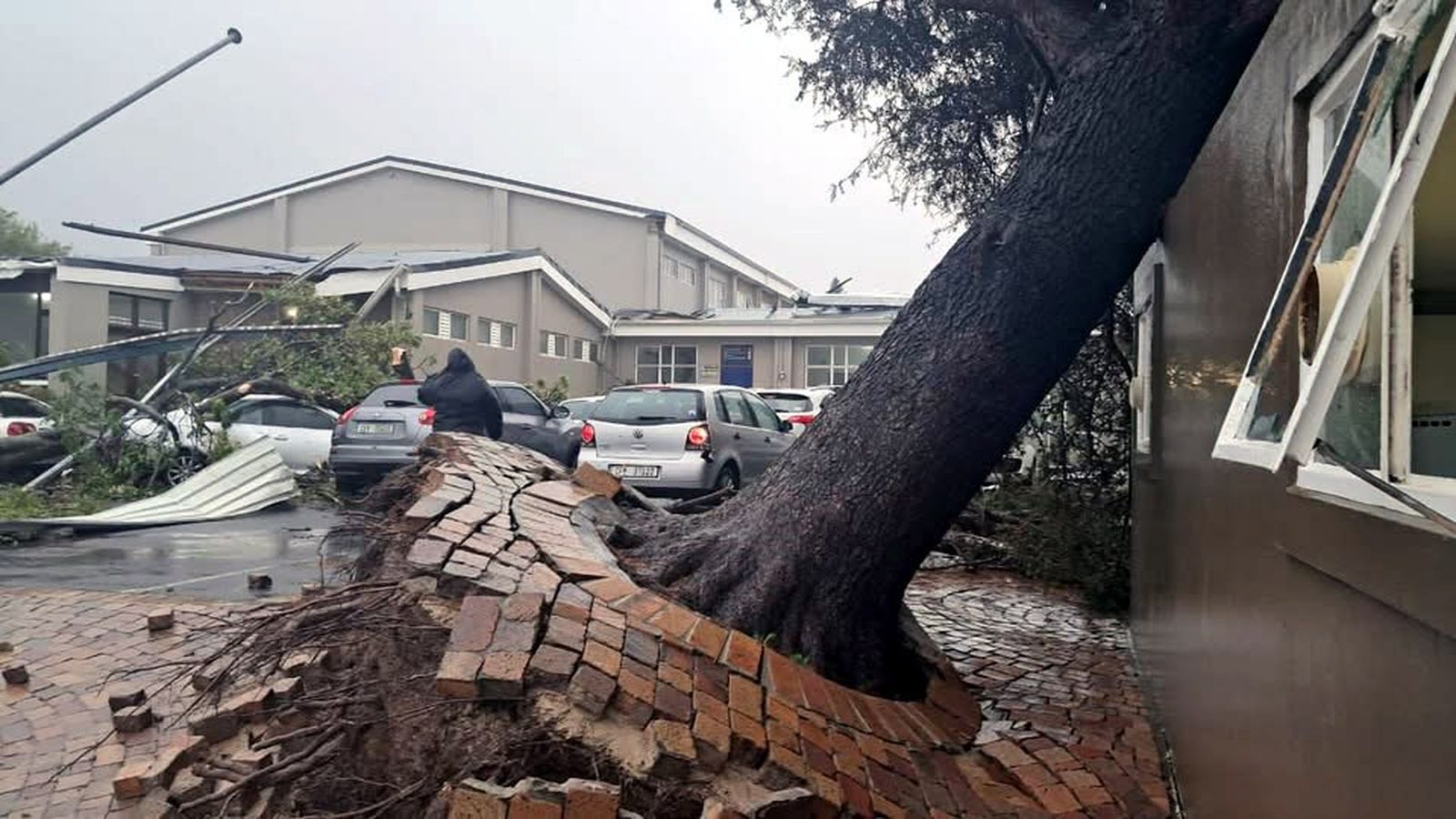
Wind speeds peaked at 117 km/h across the Cape Peninsula. Classified as a Level 8 wind event, these vigorous winds caused serious structural damage: roofs were blown off homes in neighbourhoods such as Wynberg and Hanover Park, and hundreds of trees were uprooted, causing them to smash onto roads and into power lines. Because of this damage to power lines, 4,800 electricity service requests were made citywide.
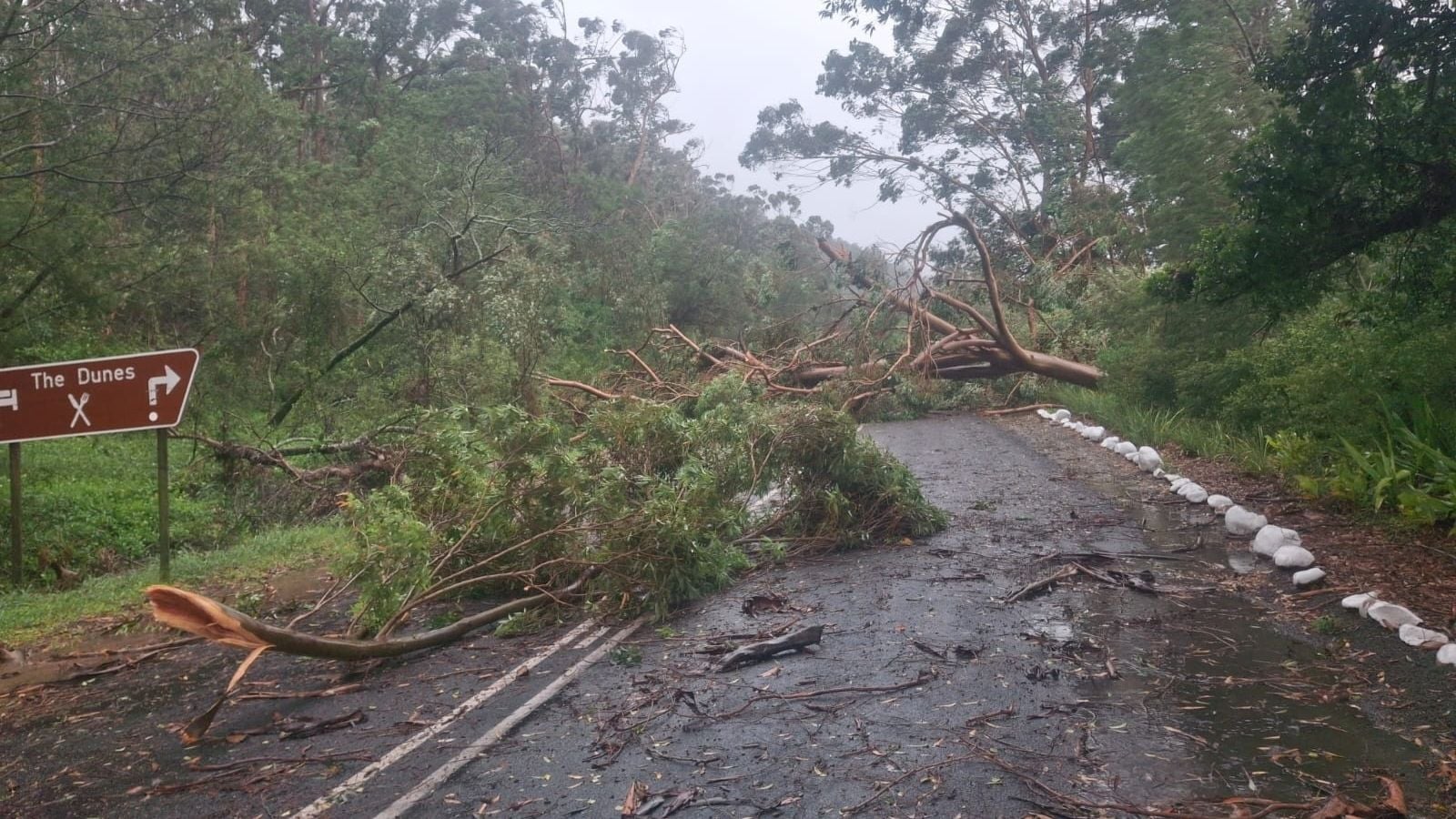
Downpours fell between 200mm and 300mm of rain within a 48-hour period, which was one of the heaviest compressed rains seen in the region in 40 years. Rivers and streams burst their banks, and rainwater flooded farms and towns. Highways, mountain passes, and bridges were closed due to severe flooding, and uprooted trees and debris were washed down to the sea. Water levels overwhelmed some metropolitan drainage systems, and the water had to be cleared by industrial pumps.
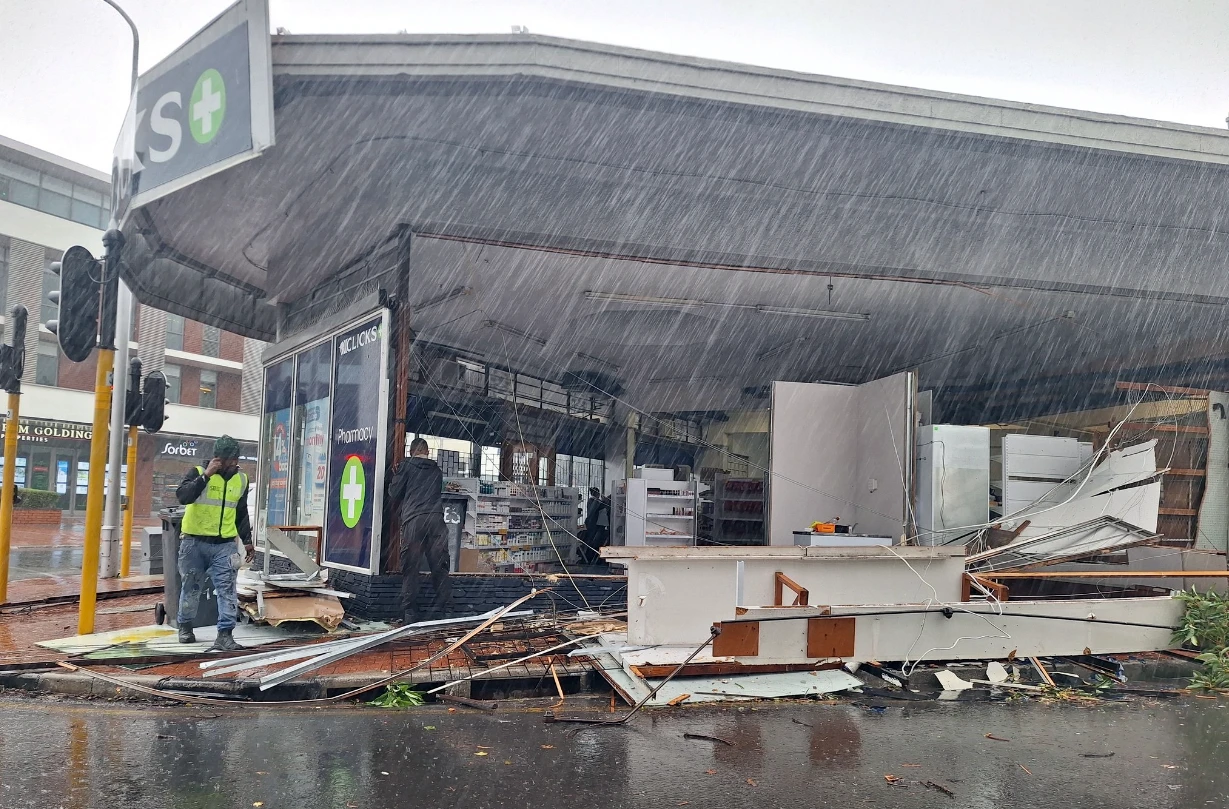
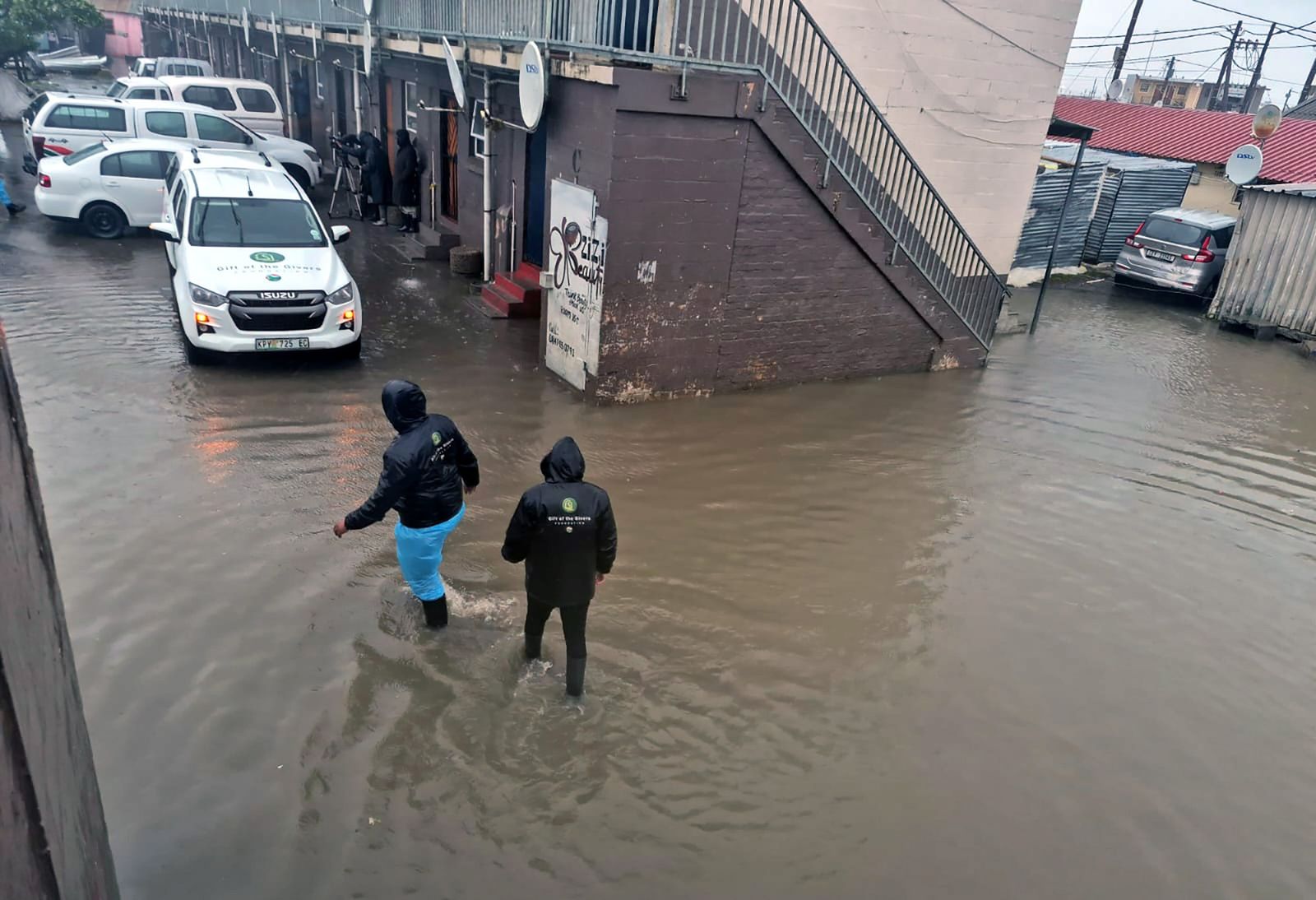
Across Cape Town, 10,700 informal dwellings and other structures were damaged or completely destroyed. More than 41,600 citizens were left vulnerable or destitute in the Cape Town metro alone, but throughout the Western Cape Province the storm affected over 83,000 people and displaced nearly 90,000 residents into community halls and shelters. Unfortunately, at least 11 lives were lost during this devastating storm. To further add to the chaos, many roads collapsed or were swept away - in some cases isolating communities for days.
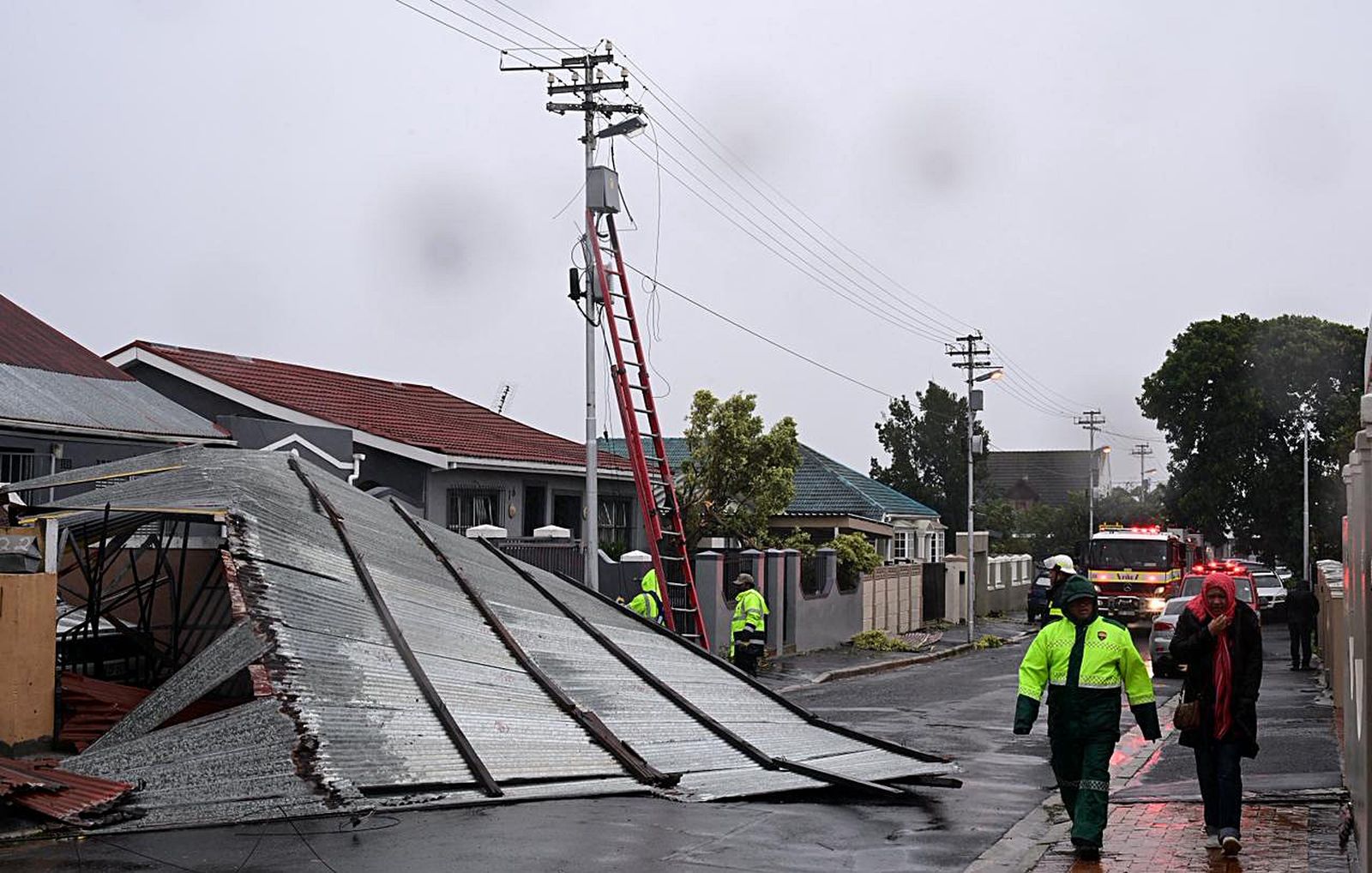
Although much damage was caused by the storm, repairs and reconstruction arrangements are now diligently being carried out nationwide.
Fortunately, here at Somerset View, we experienced no flooding or other major damages. The guest house is safely perched on a hill, so after heavy rain hit our area, the floods of rainwater washed downhill and away from the property. We often highlight the beautiful view our guests can enjoy because of our location in the foothills of the Helderberg, and we are indeed grateful that - at least for the kind of weather event the country witnessed this month - that our location can serve us beautifully in a different way.
View our rooms
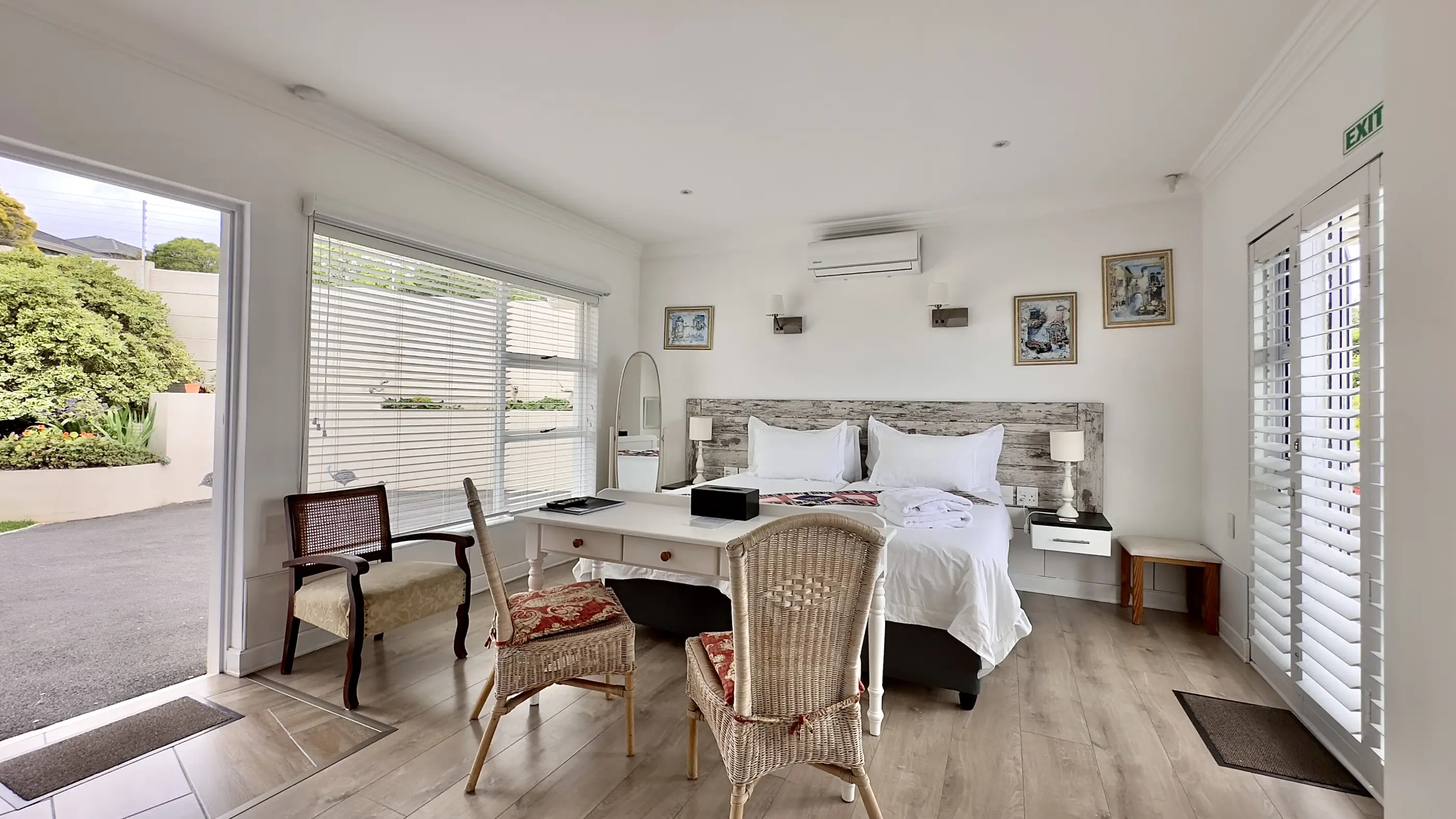
1 For All
World-class accommodation with special attention to universal accessibility for guests living with disabilities.
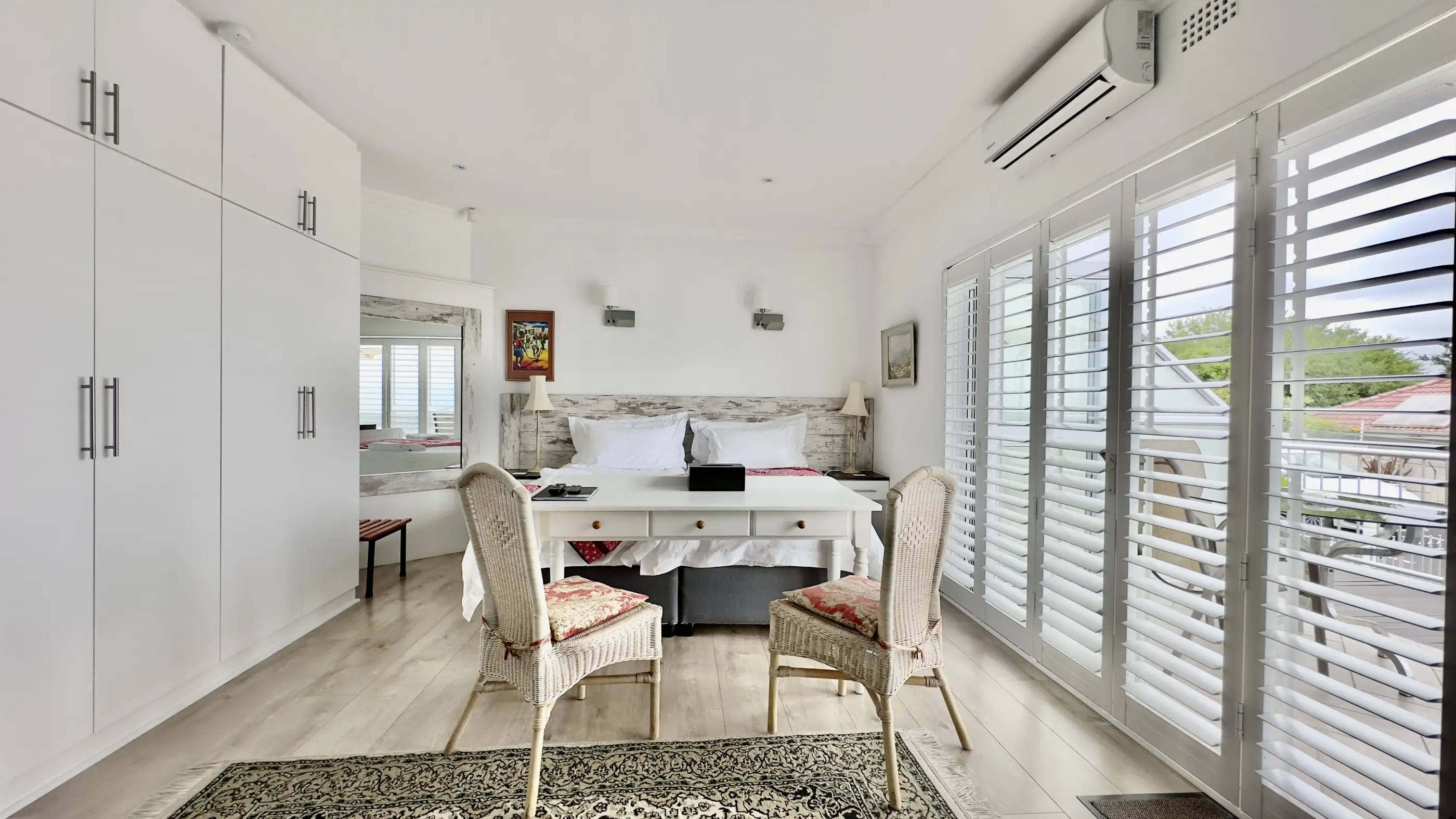
A View 2 Sea
With a sea view and your own balcony space, you'll find it easy to relax and take in the sight of False Bay and the Strand beachfront from A View 2 Sea.
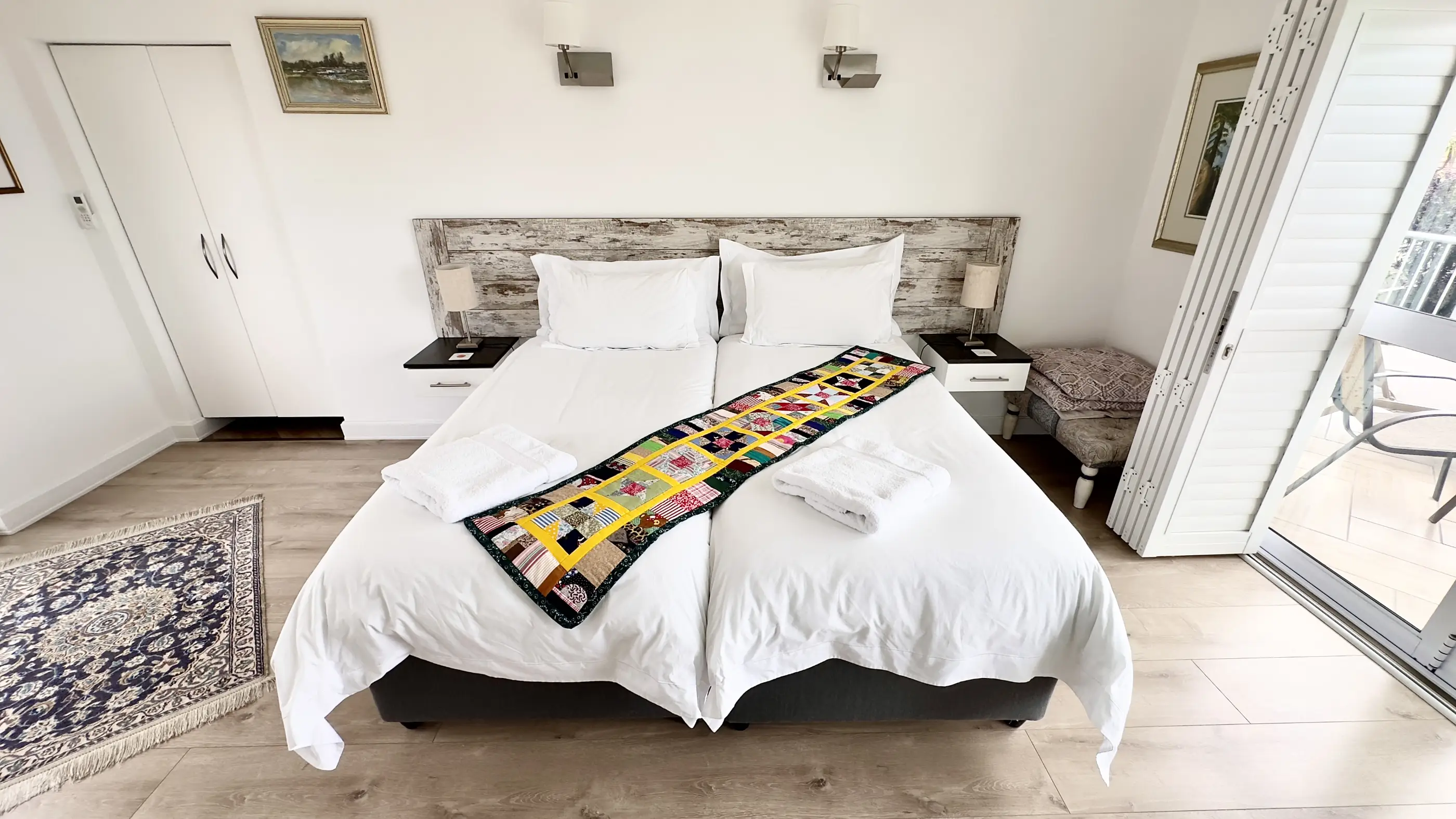
3-Way View
A private balcony at the rear of this room offers quiet solitude for early morning outdoor breakfasts, while the front balcony gives excellent access to our prime view over Somerset West, Strand, Gordons Bay, coastal mountains and the sea.
A View 4 You
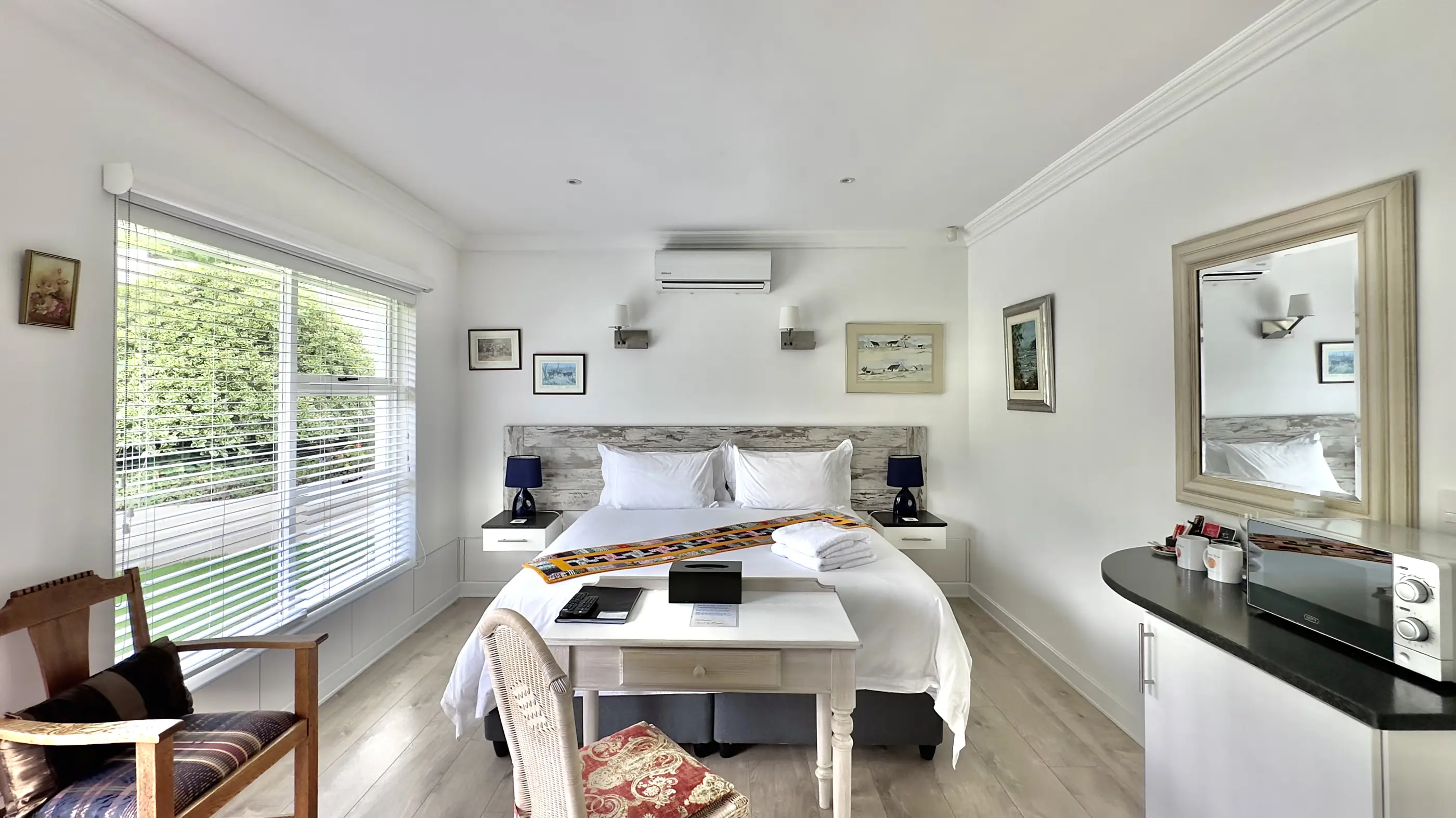
Book now This intimate and cozy room has immediate access to our BBQ/Braai area and view of the beautiful garden that will make you feel safely tucked away from the outside world.
Take 5
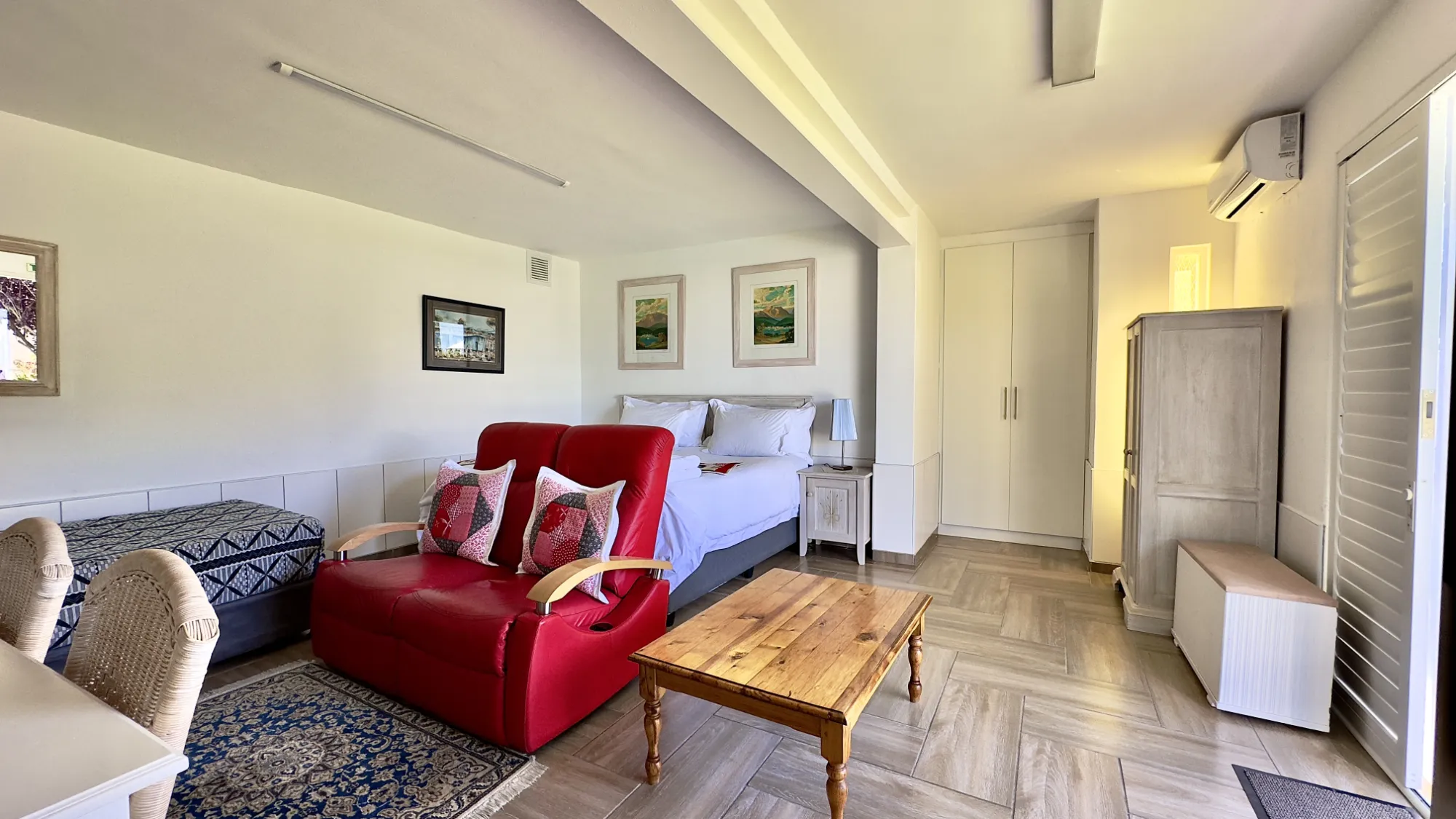
Book now Located on the ground floor of the house, this is our second most-spacious room and offers immediate walk-out access to the beautiful pool area and outdoor lounge.
District 6
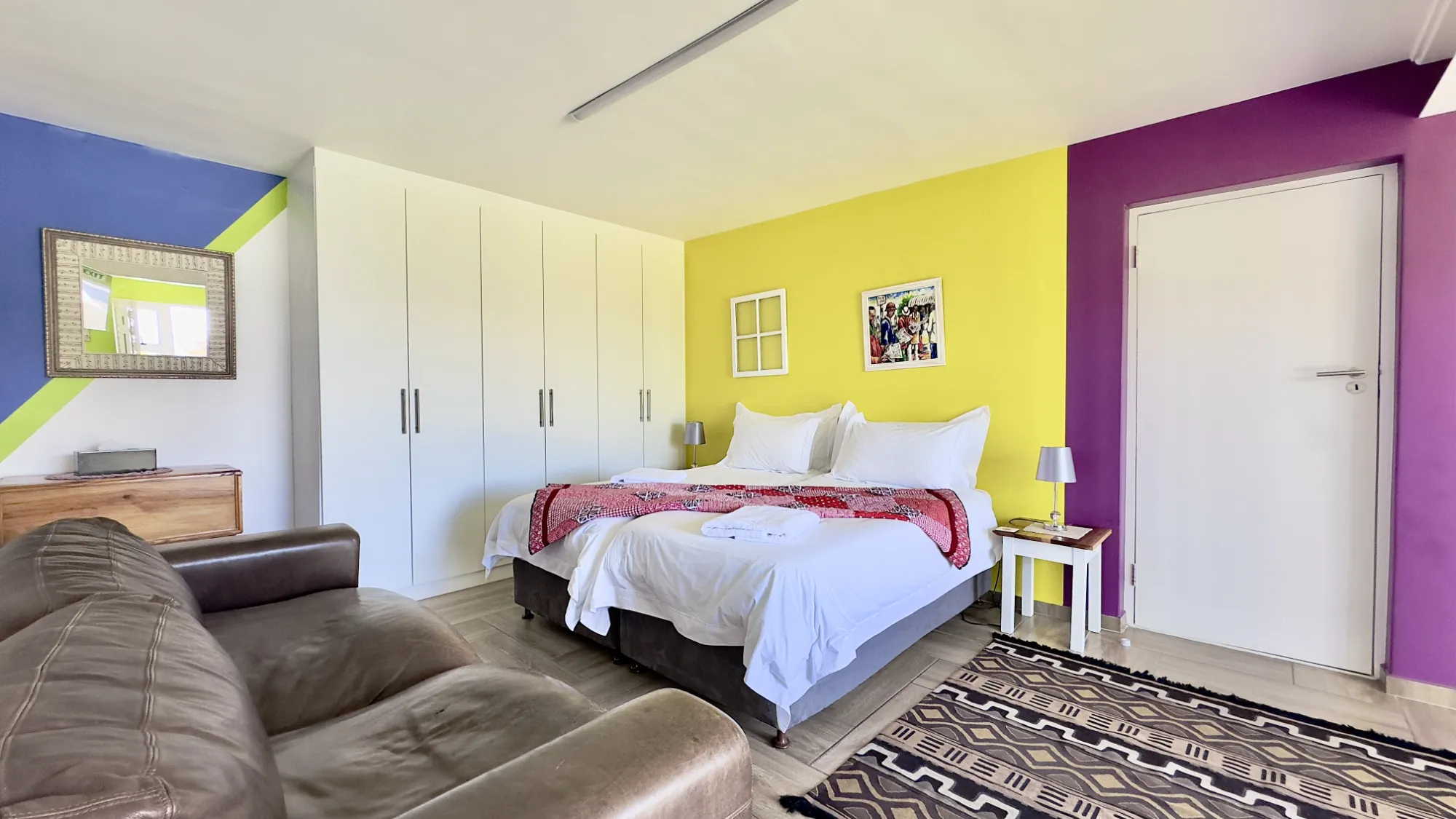
This brightly decorated, spacious room is not only our biggest, but also our only self-catering option.
A View Twenty-Four 7
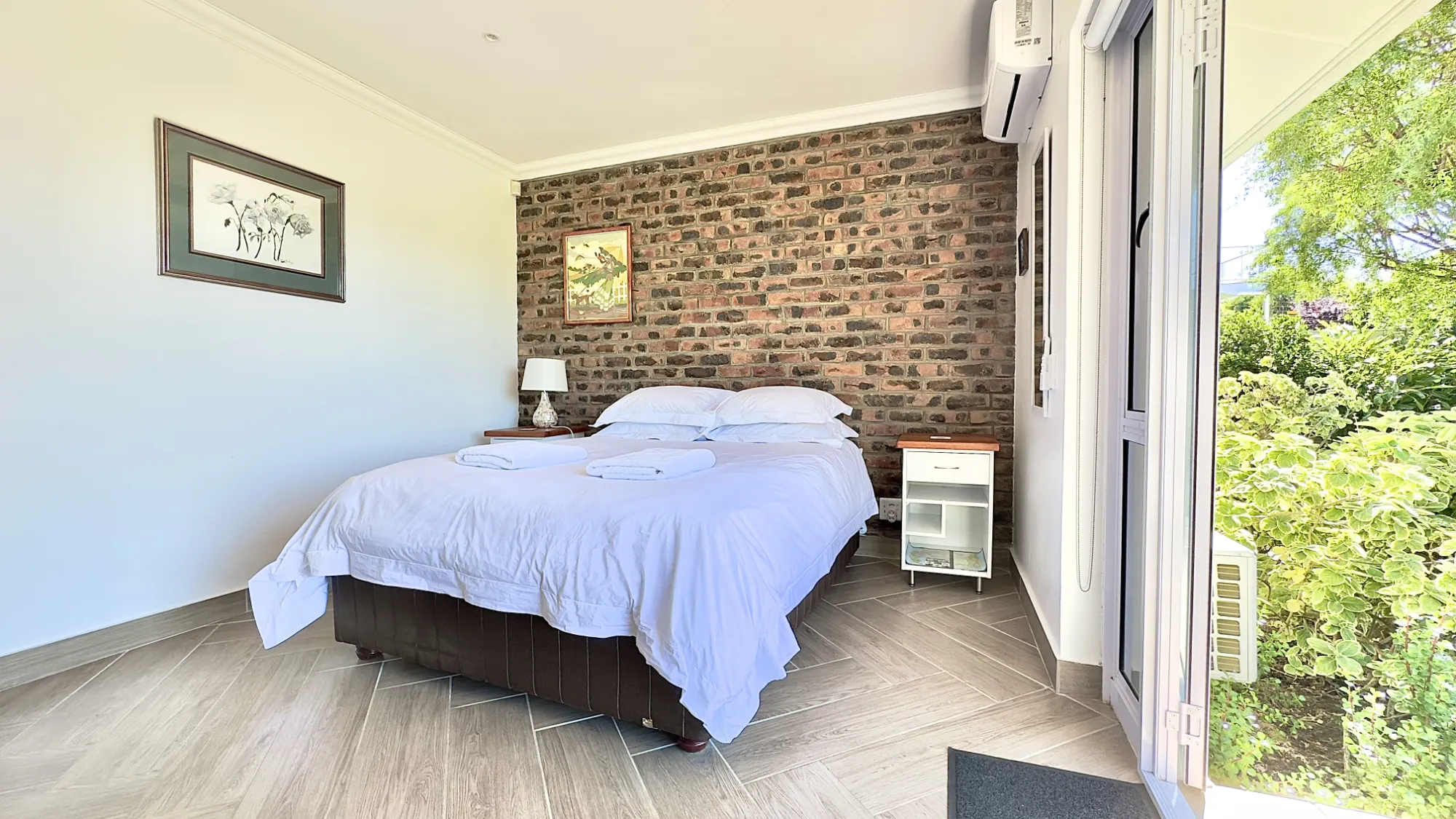
Part of our economy rooms offering next door to the main guest house, this room is nonetheless equipped with all the necessary amenities, and boasts a secure and relaxing offering to our guests.
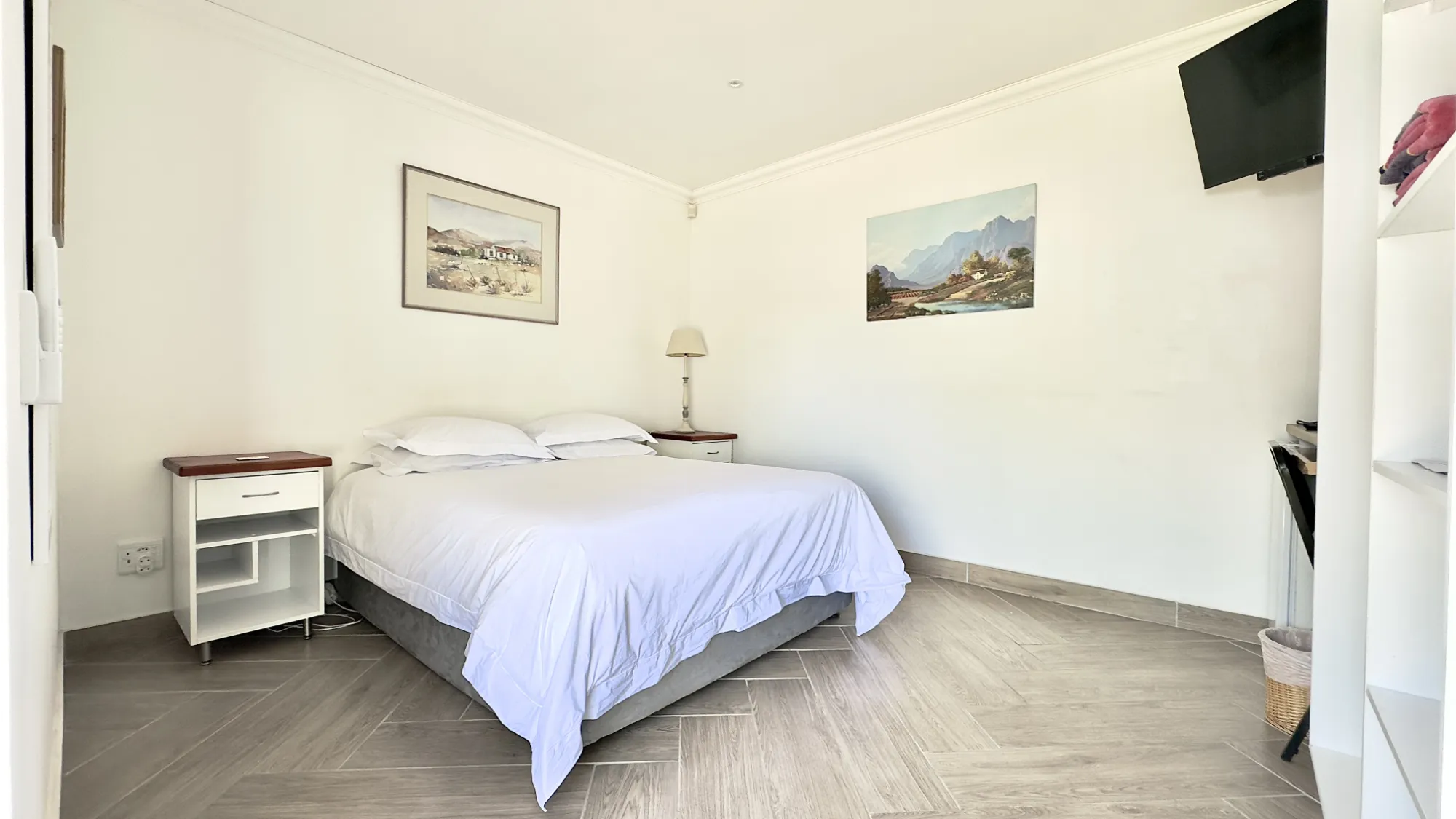
Escape to 8
Part of our economy rooms offering next door to the main guest house, Escape To 8 is beautifully finished, exceptionally clean and well-equipped, available at more affordable rates.
1 For All
World-class accommodation with special attention to universal accessibility for guests living with disabilities.
A View 2 Sea
With a sea view and your own balcony space, you'll find it easy to relax and take in the sight of False Bay and the Strand beachfront from A View 2 Sea.
3-Way View
A private balcony at the rear of this room offers quiet solitude for early morning outdoor breakfasts, while the front balcony gives excellent access to our prime view over Somerset West, Strand, Gordons Bay, coastal mountains and the sea.
A View 4 You
Book now This intimate and cozy room has immediate access to our BBQ/Braai area and view of the beautiful garden that will make you feel safely tucked away from the outside world.
Take 5
Book now Located on the ground floor of the house, this is our second most-spacious room and offers immediate walk-out access to the beautiful pool area and outdoor lounge.
District 6
This brightly decorated, spacious room is not only our biggest, but also our only self-catering option.
A View Twenty-Four 7
Part of our economy rooms offering next door to the main guest house, this room is nonetheless equipped with all the necessary amenities, and boasts a secure and relaxing offering to our guests.
Escape to 8
Part of our economy rooms offering next door to the main guest house, Escape To 8 is beautifully finished, exceptionally clean and well-equipped, available at more affordable rates.
1 For All
World-class accommodation with special attention to universal accessibility for guests living with disabilities.
A View 2 Sea
With a sea view and your own balcony space, you'll find it easy to relax and take in the sight of False Bay and the Strand beachfront from A View 2 Sea.
3-Way View
A private balcony at the rear of this room offers quiet solitude for early morning outdoor breakfasts, while the front balcony gives excellent access to our prime view over Somerset West, Strand, Gordons Bay, coastal mountains and the sea.
A View 4 You
Book now This intimate and cozy room has immediate access to our BBQ/Braai area and view of the beautiful garden that will make you feel safely tucked away from the outside world.
Take 5
Book now Located on the ground floor of the house, this is our second most-spacious room and offers immediate walk-out access to the beautiful pool area and outdoor lounge.
District 6
This brightly decorated, spacious room is not only our biggest, but also our only self-catering option.
A View Twenty-Four 7
Part of our economy rooms offering next door to the main guest house, this room is nonetheless equipped with all the necessary amenities, and boasts a secure and relaxing offering to our guests.
Escape to 8
Part of our economy rooms offering next door to the main guest house, Escape To 8 is beautifully finished, exceptionally clean and well-equipped, available at more affordable rates.
1 For All
World-class accommodation with special attention to universal accessibility for guests living with disabilities.
A View 2 Sea
With a sea view and your own balcony space, you'll find it easy to relax and take in the sight of False Bay and the Strand beachfront from A View 2 Sea.
3-Way View
A private balcony at the rear of this room offers quiet solitude for early morning outdoor breakfasts, while the front balcony gives excellent access to our prime view over Somerset West, Strand, Gordons Bay, coastal mountains and the sea.
A View 4 You
Book now This intimate and cozy room has immediate access to our BBQ/Braai area and view of the beautiful garden that will make you feel safely tucked away from the outside world.
Take 5
Book now Located on the ground floor of the house, this is our second most-spacious room and offers immediate walk-out access to the beautiful pool area and outdoor lounge.
District 6
This brightly decorated, spacious room is not only our biggest, but also our only self-catering option.
A View Twenty-Four 7
Part of our economy rooms offering next door to the main guest house, this room is nonetheless equipped with all the necessary amenities, and boasts a secure and relaxing offering to our guests.
Escape to 8
Part of our economy rooms offering next door to the main guest house, Escape To 8 is beautifully finished, exceptionally clean and well-equipped, available at more affordable rates.
1 For All
World-class accommodation with special attention to universal accessibility for guests living with disabilities.
A View 2 Sea
With a sea view and your own balcony space, you'll find it easy to relax and take in the sight of False Bay and the Strand beachfront from A View 2 Sea.
3-Way View
A private balcony at the rear of this room offers quiet solitude for early morning outdoor breakfasts, while the front balcony gives excellent access to our prime view over Somerset West, Strand, Gordons Bay, coastal mountains and the sea.
A View 4 You
Book now This intimate and cozy room has immediate access to our BBQ/Braai area and view of the beautiful garden that will make you feel safely tucked away from the outside world.
Take 5
Book now Located on the ground floor of the house, this is our second most-spacious room and offers immediate walk-out access to the beautiful pool area and outdoor lounge.
District 6
This brightly decorated, spacious room is not only our biggest, but also our only self-catering option.
A View Twenty-Four 7
Part of our economy rooms offering next door to the main guest house, this room is nonetheless equipped with all the necessary amenities, and boasts a secure and relaxing offering to our guests.
Escape to 8
Part of our economy rooms offering next door to the main guest house, Escape To 8 is beautifully finished, exceptionally clean and well-equipped, available at more affordable rates.
1 For All
World-class accommodation with special attention to universal accessibility for guests living with disabilities.
A View 2 Sea
With a sea view and your own balcony space, you'll find it easy to relax and take in the sight of False Bay and the Strand beachfront from A View 2 Sea.
3-Way View
A private balcony at the rear of this room offers quiet solitude for early morning outdoor breakfasts, while the front balcony gives excellent access to our prime view over Somerset West, Strand, Gordons Bay, coastal mountains and the sea.
A View 4 You
Book now This intimate and cozy room has immediate access to our BBQ/Braai area and view of the beautiful garden that will make you feel safely tucked away from the outside world.
Take 5
Book now Located on the ground floor of the house, this is our second most-spacious room and offers immediate walk-out access to the beautiful pool area and outdoor lounge.
District 6
This brightly decorated, spacious room is not only our biggest, but also our only self-catering option.
A View Twenty-Four 7
Part of our economy rooms offering next door to the main guest house, this room is nonetheless equipped with all the necessary amenities, and boasts a secure and relaxing offering to our guests.
Escape to 8
Part of our economy rooms offering next door to the main guest house, Escape To 8 is beautifully finished, exceptionally clean and well-equipped, available at more affordable rates.
1 For All
World-class accommodation with special attention to universal accessibility for guests living with disabilities.
A View 2 Sea
With a sea view and your own balcony space, you'll find it easy to relax and take in the sight of False Bay and the Strand beachfront from A View 2 Sea.
3-Way View
A private balcony at the rear of this room offers quiet solitude for early morning outdoor breakfasts, while the front balcony gives excellent access to our prime view over Somerset West, Strand, Gordons Bay, coastal mountains and the sea.
A View 4 You
Book now This intimate and cozy room has immediate access to our BBQ/Braai area and view of the beautiful garden that will make you feel safely tucked away from the outside world.
Take 5
Book now Located on the ground floor of the house, this is our second most-spacious room and offers immediate walk-out access to the beautiful pool area and outdoor lounge.
District 6
This brightly decorated, spacious room is not only our biggest, but also our only self-catering option.
A View Twenty-Four 7
Part of our economy rooms offering next door to the main guest house, this room is nonetheless equipped with all the necessary amenities, and boasts a secure and relaxing offering to our guests.
Escape to 8
Part of our economy rooms offering next door to the main guest house, Escape To 8 is beautifully finished, exceptionally clean and well-equipped, available at more affordable rates.
1 For All
World-class accommodation with special attention to universal accessibility for guests living with disabilities.
A View 2 Sea
With a sea view and your own balcony space, you'll find it easy to relax and take in the sight of False Bay and the Strand beachfront from A View 2 Sea.
3-Way View
A private balcony at the rear of this room offers quiet solitude for early morning outdoor breakfasts, while the front balcony gives excellent access to our prime view over Somerset West, Strand, Gordons Bay, coastal mountains and the sea.
A View 4 You
Book now This intimate and cozy room has immediate access to our BBQ/Braai area and view of the beautiful garden that will make you feel safely tucked away from the outside world.
Take 5
Book now Located on the ground floor of the house, this is our second most-spacious room and offers immediate walk-out access to the beautiful pool area and outdoor lounge.
District 6
This brightly decorated, spacious room is not only our biggest, but also our only self-catering option.
A View Twenty-Four 7
Part of our economy rooms offering next door to the main guest house, this room is nonetheless equipped with all the necessary amenities, and boasts a secure and relaxing offering to our guests.
Escape to 8
Part of our economy rooms offering next door to the main guest house, Escape To 8 is beautifully finished, exceptionally clean and well-equipped, available at more affordable rates.
1 For All
World-class accommodation with special attention to universal accessibility for guests living with disabilities.
A View 2 Sea
With a sea view and your own balcony space, you'll find it easy to relax and take in the sight of False Bay and the Strand beachfront from A View 2 Sea.
3-Way View
A private balcony at the rear of this room offers quiet solitude for early morning outdoor breakfasts, while the front balcony gives excellent access to our prime view over Somerset West, Strand, Gordons Bay, coastal mountains and the sea.
A View 4 You
Book now This intimate and cozy room has immediate access to our BBQ/Braai area and view of the beautiful garden that will make you feel safely tucked away from the outside world.
Take 5
Book now Located on the ground floor of the house, this is our second most-spacious room and offers immediate walk-out access to the beautiful pool area and outdoor lounge.
District 6
This brightly decorated, spacious room is not only our biggest, but also our only self-catering option.
A View Twenty-Four 7
Part of our economy rooms offering next door to the main guest house, this room is nonetheless equipped with all the necessary amenities, and boasts a secure and relaxing offering to our guests.
Escape to 8
Part of our economy rooms offering next door to the main guest house, Escape To 8 is beautifully finished, exceptionally clean and well-equipped, available at more affordable rates.
1 For All
World-class accommodation with special attention to universal accessibility for guests living with disabilities.
A View 2 Sea
With a sea view and your own balcony space, you'll find it easy to relax and take in the sight of False Bay and the Strand beachfront from A View 2 Sea.
3-Way View
A private balcony at the rear of this room offers quiet solitude for early morning outdoor breakfasts, while the front balcony gives excellent access to our prime view over Somerset West, Strand, Gordons Bay, coastal mountains and the sea.
A View 4 You
Book now This intimate and cozy room has immediate access to our BBQ/Braai area and view of the beautiful garden that will make you feel safely tucked away from the outside world.
Take 5
Book now Located on the ground floor of the house, this is our second most-spacious room and offers immediate walk-out access to the beautiful pool area and outdoor lounge.
District 6
This brightly decorated, spacious room is not only our biggest, but also our only self-catering option.
A View Twenty-Four 7
Part of our economy rooms offering next door to the main guest house, this room is nonetheless equipped with all the necessary amenities, and boasts a secure and relaxing offering to our guests.
Escape to 8
Part of our economy rooms offering next door to the main guest house, Escape To 8 is beautifully finished, exceptionally clean and well-equipped, available at more affordable rates.
1 For All
World-class accommodation with special attention to universal accessibility for guests living with disabilities.
A View 2 Sea
With a sea view and your own balcony space, you'll find it easy to relax and take in the sight of False Bay and the Strand beachfront from A View 2 Sea.
3-Way View
A private balcony at the rear of this room offers quiet solitude for early morning outdoor breakfasts, while the front balcony gives excellent access to our prime view over Somerset West, Strand, Gordons Bay, coastal mountains and the sea.
A View 4 You
Book now This intimate and cozy room has immediate access to our BBQ/Braai area and view of the beautiful garden that will make you feel safely tucked away from the outside world.
Take 5
Book now Located on the ground floor of the house, this is our second most-spacious room and offers immediate walk-out access to the beautiful pool area and outdoor lounge.
District 6
This brightly decorated, spacious room is not only our biggest, but also our only self-catering option.
A View Twenty-Four 7
Part of our economy rooms offering next door to the main guest house, this room is nonetheless equipped with all the necessary amenities, and boasts a secure and relaxing offering to our guests.
Escape to 8
Part of our economy rooms offering next door to the main guest house, Escape To 8 is beautifully finished, exceptionally clean and well-equipped, available at more affordable rates.
1 For All
World-class accommodation with special attention to universal accessibility for guests living with disabilities.
A View 2 Sea
With a sea view and your own balcony space, you'll find it easy to relax and take in the sight of False Bay and the Strand beachfront from A View 2 Sea.
3-Way View
A private balcony at the rear of this room offers quiet solitude for early morning outdoor breakfasts, while the front balcony gives excellent access to our prime view over Somerset West, Strand, Gordons Bay, coastal mountains and the sea.
A View 4 You
Book now This intimate and cozy room has immediate access to our BBQ/Braai area and view of the beautiful garden that will make you feel safely tucked away from the outside world.
Take 5
Book now Located on the ground floor of the house, this is our second most-spacious room and offers immediate walk-out access to the beautiful pool area and outdoor lounge.
District 6
This brightly decorated, spacious room is not only our biggest, but also our only self-catering option.
A View Twenty-Four 7
Part of our economy rooms offering next door to the main guest house, this room is nonetheless equipped with all the necessary amenities, and boasts a secure and relaxing offering to our guests.
Escape to 8
Part of our economy rooms offering next door to the main guest house, Escape To 8 is beautifully finished, exceptionally clean and well-equipped, available at more affordable rates.
1 For All
World-class accommodation with special attention to universal accessibility for guests living with disabilities.
A View 2 Sea
With a sea view and your own balcony space, you'll find it easy to relax and take in the sight of False Bay and the Strand beachfront from A View 2 Sea.
3-Way View
A private balcony at the rear of this room offers quiet solitude for early morning outdoor breakfasts, while the front balcony gives excellent access to our prime view over Somerset West, Strand, Gordons Bay, coastal mountains and the sea.
A View 4 You
Book now This intimate and cozy room has immediate access to our BBQ/Braai area and view of the beautiful garden that will make you feel safely tucked away from the outside world.
Take 5
Book now Located on the ground floor of the house, this is our second most-spacious room and offers immediate walk-out access to the beautiful pool area and outdoor lounge.
District 6
This brightly decorated, spacious room is not only our biggest, but also our only self-catering option.
A View Twenty-Four 7
Part of our economy rooms offering next door to the main guest house, this room is nonetheless equipped with all the necessary amenities, and boasts a secure and relaxing offering to our guests.
Escape to 8
Part of our economy rooms offering next door to the main guest house, Escape To 8 is beautifully finished, exceptionally clean and well-equipped, available at more affordable rates.
1 For All
World-class accommodation with special attention to universal accessibility for guests living with disabilities.
A View 2 Sea
With a sea view and your own balcony space, you'll find it easy to relax and take in the sight of False Bay and the Strand beachfront from A View 2 Sea.
3-Way View
A private balcony at the rear of this room offers quiet solitude for early morning outdoor breakfasts, while the front balcony gives excellent access to our prime view over Somerset West, Strand, Gordons Bay, coastal mountains and the sea.
A View 4 You
Book now This intimate and cozy room has immediate access to our BBQ/Braai area and view of the beautiful garden that will make you feel safely tucked away from the outside world.
Take 5
Book now Located on the ground floor of the house, this is our second most-spacious room and offers immediate walk-out access to the beautiful pool area and outdoor lounge.
District 6
This brightly decorated, spacious room is not only our biggest, but also our only self-catering option.
A View Twenty-Four 7
Part of our economy rooms offering next door to the main guest house, this room is nonetheless equipped with all the necessary amenities, and boasts a secure and relaxing offering to our guests.
Escape to 8
Part of our economy rooms offering next door to the main guest house, Escape To 8 is beautifully finished, exceptionally clean and well-equipped, available at more affordable rates.
1 For All
World-class accommodation with special attention to universal accessibility for guests living with disabilities.
A View 2 Sea
With a sea view and your own balcony space, you'll find it easy to relax and take in the sight of False Bay and the Strand beachfront from A View 2 Sea.
3-Way View
A private balcony at the rear of this room offers quiet solitude for early morning outdoor breakfasts, while the front balcony gives excellent access to our prime view over Somerset West, Strand, Gordons Bay, coastal mountains and the sea.
A View 4 You
Book now This intimate and cozy room has immediate access to our BBQ/Braai area and view of the beautiful garden that will make you feel safely tucked away from the outside world.
Take 5
Book now Located on the ground floor of the house, this is our second most-spacious room and offers immediate walk-out access to the beautiful pool area and outdoor lounge.
District 6
This brightly decorated, spacious room is not only our biggest, but also our only self-catering option.
A View Twenty-Four 7
Part of our economy rooms offering next door to the main guest house, this room is nonetheless equipped with all the necessary amenities, and boasts a secure and relaxing offering to our guests.
Escape to 8
Part of our economy rooms offering next door to the main guest house, Escape To 8 is beautifully finished, exceptionally clean and well-equipped, available at more affordable rates.
1 For All
World-class accommodation with special attention to universal accessibility for guests living with disabilities.
A View 2 Sea
With a sea view and your own balcony space, you'll find it easy to relax and take in the sight of False Bay and the Strand beachfront from A View 2 Sea.
3-Way View
A private balcony at the rear of this room offers quiet solitude for early morning outdoor breakfasts, while the front balcony gives excellent access to our prime view over Somerset West, Strand, Gordons Bay, coastal mountains and the sea.
A View 4 You
Book now This intimate and cozy room has immediate access to our BBQ/Braai area and view of the beautiful garden that will make you feel safely tucked away from the outside world.
Take 5
Book now Located on the ground floor of the house, this is our second most-spacious room and offers immediate walk-out access to the beautiful pool area and outdoor lounge.
District 6
This brightly decorated, spacious room is not only our biggest, but also our only self-catering option.
A View Twenty-Four 7
Part of our economy rooms offering next door to the main guest house, this room is nonetheless equipped with all the necessary amenities, and boasts a secure and relaxing offering to our guests.
Escape to 8
Part of our economy rooms offering next door to the main guest house, Escape To 8 is beautifully finished, exceptionally clean and well-equipped, available at more affordable rates.